CO2 Mitigation versus Our Ecosystems
The Monterey Declaration on Climate Mitigation at the expense of Healthy Ecosystems
Joseph A. Biello, Michael T. Montgomery, Chuck Pezeshki and Kathryn Hudacek Harlow
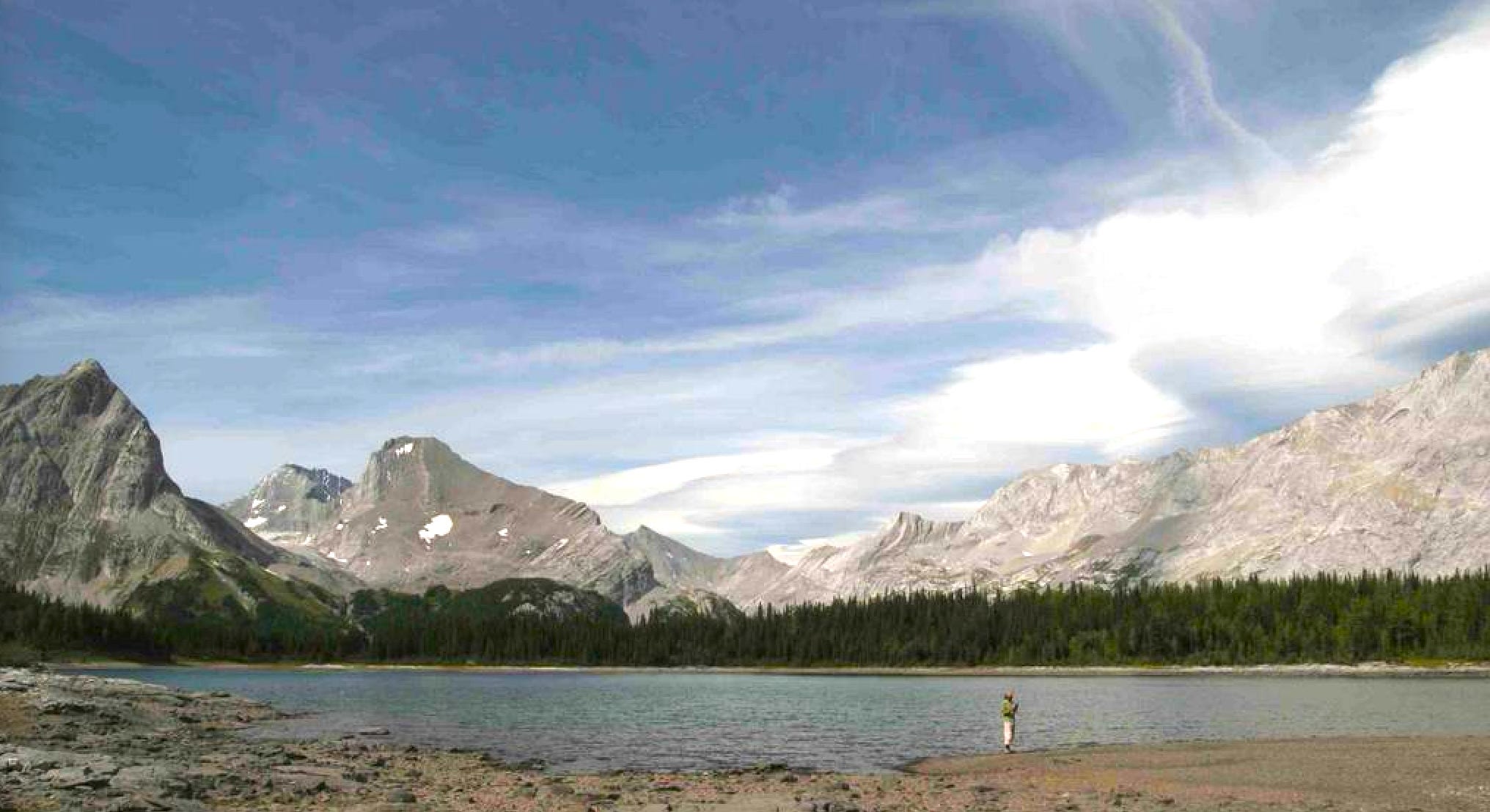
Since the Kyoto Protocol of 1997, environmentalism has become synonymous with anthropogenic climate change activism and carbon dioxide reduction. However, efforts to reduce carbon dioxide emissions through a pivot to green energy have increasingly impacted the wild environment of the planet and damaged large parts of our landscape and ecosystem, while only providing low energy density for human use. Furthermore, there has been increasing interest in large-scale efforts at mitigating warming; efforts whose secondary effects are not understood and could have catastrophic consequences both environmentally and economically. Some examples of these interventions include the clear cutting of high latitude vegetation to increase the amount of visible solar light that our planet reflects back to space, the release of toxins (such as sulphur dioxide) or non-toxins (calcium carbonate dust) into the atmosphere to do the same, the endangerment of birds, sea mammals and reptiles by invasive clean energy farms, and sequestering wood underground to prevent carbon release.
We recognize the irreplaceable role of intact ecosystems upon which we depend for the health of the planet, and for life itself. So, we stand affirmed against destroying these ecosystems in the name of limiting our carbon dioxide footprint.
Instruments of weather observation became sophisticated and widespread enough to begin to measure Earth’s climate only in the early 20th Century, just after the end of the Little Ice Age. This period also coincided with the maturation of the Industrial Revolution and the increase in industrially emitted CO2. Despite our greater understanding of atmosphere/ocean dynamics, we continue to struggle to disentangle natural versus anthropogenic climate variability.
Observations from a wide range of sources have consistently shown the warming of our planet’s atmosphere and surface of about 1.3 degrees Centigrade since 1860. Human-emitted carbon dioxide through the burning of fossil fuels has been partially implicated in this warming, which has been understood since the work of Arhennius (1896), Manabe et al. (1965), and more recently through large-scale computational models of the general circulation of the atmosphere and oceans.
Over the past several decades, some atmospheric and oceanic scientists have warned that the observed warming constitutes an existential threat to humanity and the larger biosphere. These scientists assert that the frequency of observed disastrous weather events can be ascribed to climate change caused by human-emitted CO2. Using computational models, atmospheric and oceanic scientists, working through the Intergovernmental Panel on Climate Change, have predicted that climate change, through our emissions of CO2, will result in:
Ocean rise and the devastation of low-lying human communities,
The bleaching of coral reefs due to CO2 ocean acidification, leading to the collapse of reef biota;
The desertification of southern Europe;
Increased wildfire risk throughout the middle latitudes;
Water scarcity in the Indus/Brahmaputra and other watersheds;
Increased tropical cyclone intensity;
The poleward deviation of the midlatitude storm tracks;
The rapid melting of the Greenland and Antarctic ice sheets;
The shutdown of the Atlantic Meridional Overturning Circulation (AMOC),
among many other predictions.
However, in the three decades since the Kyoto Protocol, observations have enabled us to compare predictions to reality, and the observations paint a starkly different picture than the computational models have suggested:
Although the rate of input of CO2 to our atmosphere continues to increase, the rate of increase of temperature anomaly since 1970 has remained steady.
The CERES satellite program, in orbit since 2000, has unequivocally shown that Global temperature increase is correlated with the reduction of tropical cloud cover (albedo), with the latter accounting for 83% of the variance of the former. The CERES data show that the outgoing longwave radiation has slowly increased in accordance with the decreased albedo of the Earth. These observations suggest that the tropical atmosphere self-regulates, just as an iris regulates the amount of light entering the eye.
Taken together, the observational evidence has caused us to question the popular narrative that global warming will have catastrophic consequences for weather, that climate models capture the cause of global warming, and that climate models reliably predict regional weather tendencies as the planet warms.
The failure of climate models to reproduce major observations, and their inability to properly account for all manner of phenomena (among which are cloud albedo changes, carbon transport by rivers, increasing Antarctic ice, and the effect of forests to modulate the water cycle) creates an epistemological crisis for climate science. We ask, does our knowledge of the atmosphere/ocean system flow from our observations, or is it imparted by computer models of climate, which are limited in their assimilation of, as well as their resolution of, these phenomena?
The atmosphere/ocean system is an archetype example of a forced, dissipative, nonlinear, infinite-dimensional dynamical system. It is in a state of turbulent flow comprising large-scale waves, coherent vortices, filamentary structures, and large-scale gyre circulations that in aggregate reaches a statistical equilibrium, which is robust against small changes in their features; it does not tend to have tipping points. In the example of our atmosphere, the changing feature is the increasing amount of the trace gas, CO2. The robust statistical equilibrium is the state of the climate.
We must realize that the atmosphere-ocean system has inherent fluctuations (internal variability) that often manifest as a quasi-periodically changing climate. These changes are an inevitable feature of the complex atmosphere-ocean geofluid enveloping planet Earth. An example of such an internal oscillation is the approximate 3-8 year El Nino-Southern Oscillation. Elsewhere in the solar system, is the example of the 22 year magnetic cycle in the Sun, which gives rise to Sunspots. In fact, there were long periods with a dearth of sunspots in the past, such as during the Maunder Minimum, shortly after Sunspots were discovered by Galileo. The point of these examples is that, while our CO2 output has an effect on the atmosphere-ocean geofluid, natural oscillations are ubiquitous and significant; controlling CO2 output will likely have a limited effect on Earth’s future temperature.
Therefore, we have become convinced that the premise that modern humans can adjust a single control knob, CO2 emissions, and dramatically affect the climate is highly questionable from the physical perspective, and unsupported observationally. More importantly, we are concerned that policies which focus on controlling CO2 emissions will do more harm to regional ecosystems than they will do good for the global climate.
We must acknowledge that green energy (nuclear fission excluded) has an enormous land and ecological footprint for the energy it produces, and a rapid conversion to renewable energy will be unable to reliably and affordably satisfy the energy needs of Earth’s people. We must recognize that grandiose ideas to cool the planet may have unintended, unpredictable consequences and may lead to catastrophic damage to the environment. Finally, we must be cognizant that climate change alarmism has broken the spirit of a generation of our youth, many of whom are convinced of the inevitability of global climate catastrophe.
We call on researchers to revisit atmosphere/ocean science fundamentals in light of CERES satellite observations of decreasing planetary albedo and increasing outgoing longwave radiation which contradict the standard CO2 narrative. Researchers must recognize that their role is to produce unbiased observations and predictions, and advise policy makers. However, public policy is determined by the democratic voices of the inhabitants of our planet; it is they who ultimately weigh and measure the advice and balance their values and policy preferences. We call on the whole population to push back against CO2 net-zero hysteria and to insist that public policy strike a healthy balance between developing communities, building resilient infrastructure, and preserving wild ecosystems.
Bibliography
Arrhenius, S.A. (1896) On the influence of Carbonic acid in the air upon the temperature of the Earth. Philosophical Magazine, 41, 237-276.
Manabe, S. and R. T. Weatherland, 1967: Thermal Equilibrium of the Atmosphere with a Given Distribution of Relative Humidity. J. Atmos. Sci., 24,241-259.
Rossby, T & Soiland, H., “Rethinking Oceanic Overturning in the Nordic Seas - Eos” 2024. Eos.org.
Maue, R. Tropical Cyclone Data. 2025. Climatlas.com. Retrieved from: https://climatlas.com/tropical/
Rohrer, M., Fischer, A. M., & Wild, M. (2024). Observed increase in Mediterranean precipitation during the past decades. Nature, 630(8015), 89-94. https://www.nature.com/articles/s41586-024-08576-6
National Snow and Ice Data Center: a part of CIRES at the University of Colorado Boulder. https://nsidc.org/data/masie https://nsidc.org/sea-ice-today
Weather Related Deaths and Crop Yields, 2024: Our World in Data.
California Water Storage. 2025: What is a Triple Dip La Nina? NBC San Diego.
Global CO2 Trends. 2024: NOAA Global Monitoring Laboratory. Retrieved from: https://gml.noaa.gov/ccgg/trends/
Morice, C. P., Kennedy, J. J., Rayner, N. A., Winn, J. P., Hogan, E., Killick, R. E., Dunn, R.J.H., Osborn, T.J, Jones, P.D., Simpson, I.R., 2021: An updated assessment of near-surface temperature change from 1850: the HadCRUT5 data set. Journal of Geophysical Research: Atmospheres, 126(3).
Stephens GL, Hakuba MZ, Kato S, Gettelman A, Dufresne J-L, Andrews T, Cole JNS, Willen U, Mauritsen T., 2022: The changing nature of Earth’s reflected sunlight. Proc. R. Soc. A 478: 20220053.
Lindzen, R. S., and Y.-S. Choi, 2021: The Iris Effect: A Review. Asia-Pacific Journal of Atmospheric Sciences, 57(3), 329-342.
Lindzen, R.S. and W. Happer, 2025: Physics demonstrates that increasing greenhouse gases cannot cause dangerous warming, extreme weather, or any harm.
Renewable Energy to Save the Planet? A Soho Forum Debate, Steve Koonin & Andrew Dessler on Reason TV. August 15, 2022.
https://engaging-data.com/california-reservoirs-and-snowpack/
Bravo! Let’s get this to Sheldon Whitehouse! He’s lost in the climate alarmist world and duping way too many.
Are you allowing internet randos (i.e. my good self) to also sign this?